Category Archives: blog

MIX09 teasers from Angus Logan and yours truly

mix09This is what Vegas can do to you, it makes you stream a video demo of upcoming product announcements.

Angus Logan and James Senior of Live Mesh fame decided to do a little midnight tease of some web technology to be announced at Microsoft’s MIX 09 event starting tomorrow. Typical of a tease, it cuts off at probably the worst time. James, who was recording the stream blames it on Qik, but I call sabotage.

In related news, I also have a teaser for an announcement at MIX09 tomorrow. I can’t say much, but every web developer should keep an eye on MIX tomorrow. It’s not a Silverlight or Internet Explorer announcement, but its very cool and something most web developer today can and probably will use.

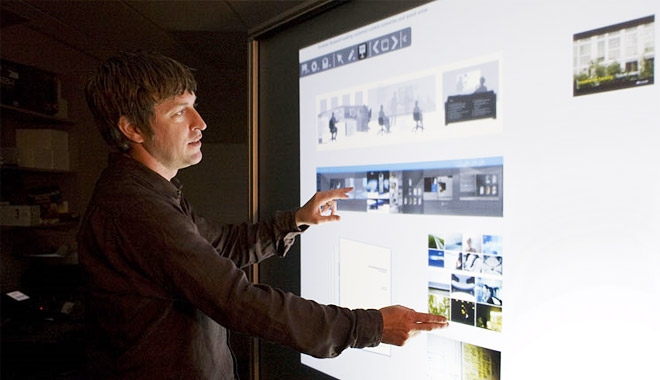
Behind vision “2019”: interview with Ian Sands, Microsoft Office Labs Director of Envisioning

Ian Sands

Microsoft Office Labs‘ awe-inspiring “2019” productivity vision video debuted a couple weeks ago introduces a lot of cool technology concepts but raises if not just as many question. Seeking to get some of those questions answered, I was fortunate enough to get in touch with someone who knows these concepts better than anyone else, Ian Sands, the Director of Envisioning at Office Labs. Here’s what he had to say.


Hi Ian. Your title, “Director of envisioning”, is not a title you see very often if at all. What does your job involve?

Hi Long. Thanks for your interest in our work!

I haven’t thought about it much but I suppose my title isn’t all that common. For the most part it just describes what I do. As the director of envisioning, my job is to work with technical leaders across the company to define and illustrate Microsoft’s 10-year productivity vision. Beyond producing the videos you’ve seen, I also oversee the Center for Information Work.

A lot of the work that is coming out of Office Labs is available today as real, downloadable and practical software applications, yet in stark contrast this group also produces these vision videos which are said to be 10 years into the future. How much is Office Labs focused on “today” and “a decade away”?

Focusing on this spectrum of near and long-term concepts is core to our strategy. Most of the downloadable projects are developed with the Office product teams to test hypotheses and gain user feedback so that we can make informed decisions about evolving our products in the future. Some of the other concept tests that users can download and try are part of the effort to help grass-roots innovators at Microsoft participate in the process. We also look to incubate new ideas that lie outside our current product offerings. These efforts look a bit further down the road to explore areas outside of our existing products.

At the other end of the spectrum, our long-term vision initiative helps us set our compass, informing the breadth of our efforts through the development of farther reaching ideas and research. In essence, the bulk of Office Labs work is about looking forward.

2019_1To put it modestly, these vision videos are mindblowing. I’ve been told you are “the guy behind the videos”, what is your role in making these videos?

Wow. That’s a huge compliment… Thanks! Of course it’s not just me; I am supported by a great team that helps make it all happen. We do everything from the research and customer analysis to the scenario development and storyboarding, to the software/hardware designs and motion studies. The diversity of roles is the key; we have designers, business strategists, developers, researchers, and program managers – all helping to make it happen. The best part of my job, besides leading the effort, is co-directing the filming of the videos themselves.

Continue reading

Razorfish DaVinci Surface application; like Crayon Physics Deluxe, only better

If you’ve ever played Crayon Physics Deluxe on a tablet PC or similar clones on the iPhone and wished you could play it on a giant table, with better physics and more control over the properties, be able to use real life objects and world peace, then the latest Microsoft Surface demo application from Razorfish has almost what you’re looking for. Rumor has it world peace is coming in version two.

Something about watching irregular sized circles roll on irregular shapes makes touch physics games very addictive.

Why I’m worried Windows Marketplace for Mobile will undermine creativity and experimentation

winmarketmobileThere’s no arguing that third-party applications is what makes smartphones great, after all, there’s only so much a first-party can or should do.
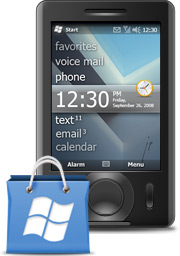
The state of the applications ecosystem on Windows Mobile today is disorganized and unprofessional, so the news couldn’t come sooner Microsoft had finally put together a centralized app store, the Windows Marketplace for Mobile. However, a small detail in the developer program has me worried developers will be reluctant or can’t afford to release cool and interesting applications.

The particular detail in the developer program I want to highlight is the cost to submit an application to the marketplace. Whilst both Microsoft and Apple asks (at least) $99 to join the developer program, Apple allows unlimited application submissions whereas Microsoft gives developers only five free submissions per year and $99 per submission after that.

Up until now, I optimistically assumed this does not apply to free applications but today, Microsoft also confirmed to me that free applications too will cost you a submission token. So if you were to submit 10 free applications a year, that would cost you $495. A lousy return on investment if you ask me.

I don’t think is fair to developers at all. If you put yourself in the shoes of a developer, ignoring what smells you may come across, instead of dreaming up experimental but perhaps not fully-refined applications which could become a very profitable application (for both the developer and Microsoft) down the road, they’re left with a burden to make sure every submission is worth the cost of submission – a token or $99.

On one hand this could be a good thing, putting an artificial barrier-to-entry for fart-noise and other not-so-practical applications, but on the other, there is the possibility of a killer application in the making never seeing the light of day, and that’s a worth a couple useless soundboard applications in my books.

Obviously developers are still free to distribute any applications on their own from their own website, but that contradicts the whole reason why there needs to be a marketplace in the first place. I believe Microsoft needs to change the development program so free applications do not require a submission token, so a developer could submit as many free applications as they wish. Anyone agree?

Windows Mobile 7: not just a “me-too iPhone”

Windows MobileOr at least that’s what they say in writing. One can only judge when it’s done.

Speaking of when, by the tone of this job advertisement for a Principal Development Manager on the Windows Mobile 7 team whose responsible for building the OS foundations, the project is definitely still in its early development stages.

The Windows Mobile 7 team is searching for a Principal Development Manager

Do you have a passion for the mobile space? Enjoy big challenges, working with and learning from a high-performance team? Do you want to be part of driving the next big business for the company?

Windows Mobile 7 will change the way you view your phone. We aren’t just building a me-too iPhone or RIM competitor; we’re changing the way customers use and experience their device. In the OS Platform team we are responsible for the OS, file systems, security, hardware platforms and drivers, networking & connectivity, location framework and updateability. In other words, we build the foundation upon which the rest of Windows Mobile is built.

As Development Manager for the Core System, you will have both ICs and Leads reporting to you, with a team of approximately 20 developers. As part of a matrix style organization, you will work closely in a triad with your PM and test counterparts. Specific areas of ownership include the kernel, file systems, security, loader, and device management.

Your job will entail:

  • Building and leading a high performance team
  • Owning and driving the core os (kernel, file systems, security, and device management) features and roadmap for Windows Mobile
  • Defining an engineering system that can scale to large organizations and span multiple releases.
  • Driving quality and performance into the core platform.
  • Mentoring your organization and building a strong bench and successor.

Update: It’s interesting to point out one particular feature the job ad mentions which I think will be essential to Windows Mobile 7’s success – “updateability”. What Microsoft is planning to achieve in WM7 is the ability to ship OS updates directly to the end-user without the need for vendor and operator snail-like intervention, a current problem that’s holding faster Windows Mobile updates back. The question is if it’ll come soon enough?

Start Windows (video)

[flv:startwindows.mp4 600 340]

At the Mobile World Congress a month ago, Microsoft began rebranding the Windows Mobile family as simply Windows and Windows Phones. At the center of this branding campaign was this new “Start something, Start Windows” metaphor that was used in many of the video materials. Visually it looked pretty cool so I began tracking down a higher-quality video to share, and I found that today on the Windows Mobile Facebook page of all places.

For those of you playing along at home, the different activities include discovering, experiencing, remembering, succeeding, finding, flirting, impressing, giggling, learning, loving, sharing, joining, blogging, browsing, juggling, buying, chatting, caring, expressing and capturing.

I for one have never juggled infront of my Windows PC but I guess one should always try new things.

Finally, if you have that thought in the back of your head “where have I seen this before”, you’re not alone.