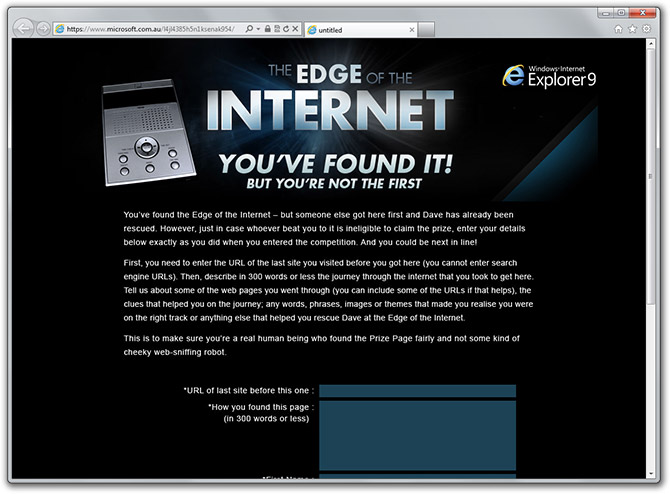
Microsoft Australia’s “Edge of the Internet” puzzle $20,000 cash prize found

Microsoft Australia’s “Edge of the Internet” promotion came to a sooner than expected end over the Christmas break as a user only identified as “Thomas from Victoria” deciphered the clues to find the secret website and collected the $20,000 cash prize. I can only imagine his holiday became even better.

Posted to the Windows Australia Facebook wall on the 28th of December 2011, it was verified the winner found the winning page with its cryptic URL of https://www.microsoft.com.au/l4jl4385h5n1ksenak954/ almost a week earlier at 22/12 on 12:52pm.

If the clues didn’t make much sense to you, the organizers has indicated it will post a detailed description about the clues and how it translates to a breadcrumb trail of websites after the New Year. The list of websites include those about the evolution of the web, food and wine, interesting HTML5 sites, space exploration, and even diabolical atrocities of the web design.

Unfortunately for Microsoft Australia, this second iteration of the competition didn’t nearly attract as much viral publicity or participation as the first “Ten grand is buried here“, both of which was designed to drive awareness for new releases of Internet Explorer.

With only 556 registered participants this time round, competition was not nearly as fierce. Notably the Whirlpool thread for this promotion only collected 6 posts, compared to several thousands of posts the previous competition drew.

The only logical explanation is that Australians have become even more lazy. It’s a good thing we still have Australium to outpace the world’s economies.

Update: Microsoft Australia has posted the full step-by-step explanation of how the clues lead to the prize and confirms Thomas’ entry was legitimate and valid.
Long live the HTC HD2 Windows phone

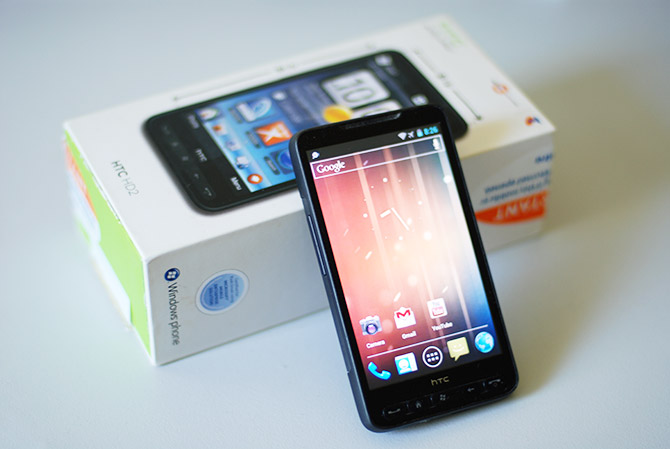
It’s hard to believe a Windows Mobile 6.5 phone is not only alive and kicking more than two years after its release, but sports some of the latest mobile OS releases thanks to an enthusiastic software modding community who persistently breathes new life into a device at least two generations behind.

When it was released in late 2009, the HD2 was state-of-the-art hardware as one of the first smartphones to sport the then-new Qualcomm Snapdragon QSD8250 processor. The fact that many recent smartphones including the first-generation Windows Phone 7s still use the same processor is actually one of the main factors why this device is able to live such a plentiful life.

Although HTC did a noteworthy job with Sense UI customizations on top of Windows Mobile 6.5, Microsoft’s best mobile offering at the time, modders had other plans.

After the MAGLDR bootloader was released by a modding group DFT, the floodgates literally flung open. Now not only could the HD2 boot Windows Mobile-based ROMs but also any Linux-based OS which includes but is not limited to Android.

As of today, the HTC HD2 forums on xda-developers are by far some of the most populated. With constant development of customized kernels and drivers for Android and Windows Phone 7, it’s impressive what developers largely driven by donations have been able to reverse engineer.

As far as I know the HTC HD2 remains the only non-native phone that can run the latest versions of both Android Ice Cream Sandwich and Windows Phone Mango today with most practical functionality supported – cellular, WiFi, touch and sensors. And if you fancy a bit of nostalgia, there are still updated Windows Mobile 6.5 ROMs.

With the dual-core and GPU trend of Android devices I’m not sure the HD2 will be able keep up much longer. If anyone has one of these lying around still running WM6.5, it might be worth trying something new. I highly recommend the bleeding-edge “NexusHD2-IceCreamSandwich Beta8” ROM.

Designer envisions generative Microsoft brand

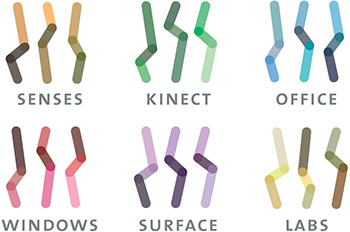
In contrast to the ever-so-slight tweak of angle on the Microsoft logo late last year, Daniel C. Young, a graphics designer at the Art Center College of Design has imagined what a much more radical Microsoft rebranding could look like.

Although the project appears to be entirely speculative. Unlike the recent HP rebranding exercise which was actually commissioned by HP but not executed upon, this is just Daniel playing with an idea, an interesting one at that – an logo and colors generated purely by algorithms.
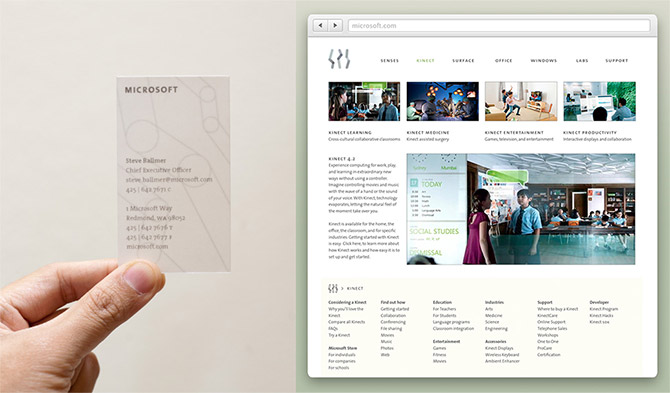
Microsoft’s focus and leadership on natural user interfaces seems to be the main source of inspiration for his concept as he explain,

Generative logo and transmedia campaign for Microsoft Reimagined, a creative vision for Microsoft to lead innovation in natural user interface (NUI) computing through research and open collaboration with the art, science, and design communities. The identity system can generate infinite variations and unique color palettes for each of Microsoft’s product line.

Daniel’s portfolio contains a range of mockups demonstrating the applications of the concept in both print and digital. There’s even a nice website mockup of a Kinect information page. For a design concept, this is quite comprehensive and quality work.

No doubts there are many practical issues with this idea, notably it’s generative nature leads to a very ambiguous logo without the wordmark, but it’s worth admiring the effort to think outside the box. Due to the tangible and intangible costs of rebranding for modern corporations, it’s unlikely Microsoft will ever change as radical as this which makes it more fun to dream.

Robbie Bach on “Act II” after Microsoft

At an Microsoft Alumni Foundation event recently, former President of Microsoft’s Entertainment & Devices Division, Robbie Bach took to the stage to explain what he has been doing after leaving Microsoft at end of 2010.

Even though the story he tells of his path to discovering the meaning of giving through charity and philanthropy is respectfully important, he made short reflection on his 22 years at the company which included a fun and honest quip about the short-lived product that no one talks about now.

“There was that KIN thing that didn’t turn out so well”. Heh.

On a related note, at the same event Bill and Melinda Gates also spoke about their current philanthropic work with some interesting references back to their time at Microsoft. For example, “the last 1% (of polio) is kind of like that last 1% of bugs in a piece of software that proves to be non-linearly difficult“. Too true.

Microsoft’s private-cloud utopian future: hover chairs, jetboots and flower-caring robots

Compared to the more grounded Productivity Vision videos, these ads for Microsoft’s private cloud solutions are definitely a bit of a stretch in the Utopian sci-fi direction.

Ignoring the obvious consequences of the grandfather paradox implied in these scenarios, it scores perfectly on the checklist of a Utopia. White curvy buildings, check. Flying cars, check. No pollution, check. Synthetic jacket clothing, check. Bright blue aura indicating everything is good and right in the world, check. Oh and of course private cloud, check.

Bill Gates interviews in Australia

I’m both glad and worries Bill Gates still has some time to do interviews while he’s on Christmas holiday in Australia, but the weather in Sydney where he’s staying hasn’t been very Summer-like so I guess he’s just passing time.

In contrast to the Fairfax interview where he was asked whether he would return to Microsoft, here’s a 12-minute video of one he did with ABC’s 7.30 where he focused entirely on his philanthropic work, health issues, energy, carbon pricing (where Australia recently introduced law for this) and even global protests.